Describe the Different Parts of a Hurricane
Knowing the typical or maximum strength of the winds caused by hurricanes in your area can dictate the required level of hurricane protection. This region can be as large as 30 miles in diameter and the skies are often clear and winds are light.

Nasa How Strong Is That Hurricane
A tropical cyclone is a rapidly rotating storm system characterized by a low-pressure center a closed low-level atmospheric circulation strong winds and a spiral arrangement of thunderstorms that produce heavy rain andor squallsDepending on its location and strength a tropical cyclone is referred to by different names including hurricane ˈ h ʌr ɪ k ən-k eɪ n.

. Hurricanes can also bring strong winds tornados rough surf and rip currents. Feeder bands are the areas of heavy rain and gusty winds fed by the warm ocean. Parts of a hurricane include.
Those with maximum sustained winds of 39 mph or higher are called tropical. Air spirals in toward the center in a counter-clockwise pattern in the northern hemisphere clockwise in the southern hemisphere and out the top in the opposite direction. Stages Of A Hurricane.
Different parts of Florida are exposed to varying levels of intensity from any hurricanes that make land. There are several ingredients required for a hurricane to form. It starts with the sun heating tropical ocean waters to the point of it evaporating.
Strongest winds of hurricane in a band surrounding the eye. People call these storms by other names such as typhoons or cyclones depending on where they occur. The sensation is really part of an indirect loop.
The only difference is the name of the storm. This is the most dangerous part of the. The eye is the warmest part of the storm.
How to describe what it feels like to be in a hurricane. A hurricanes eye is its clear center and the calmest part of the storm. The SSHWS is used by the National Hurricane Center NHC and Central Pacific Hurricane Center CPHC.
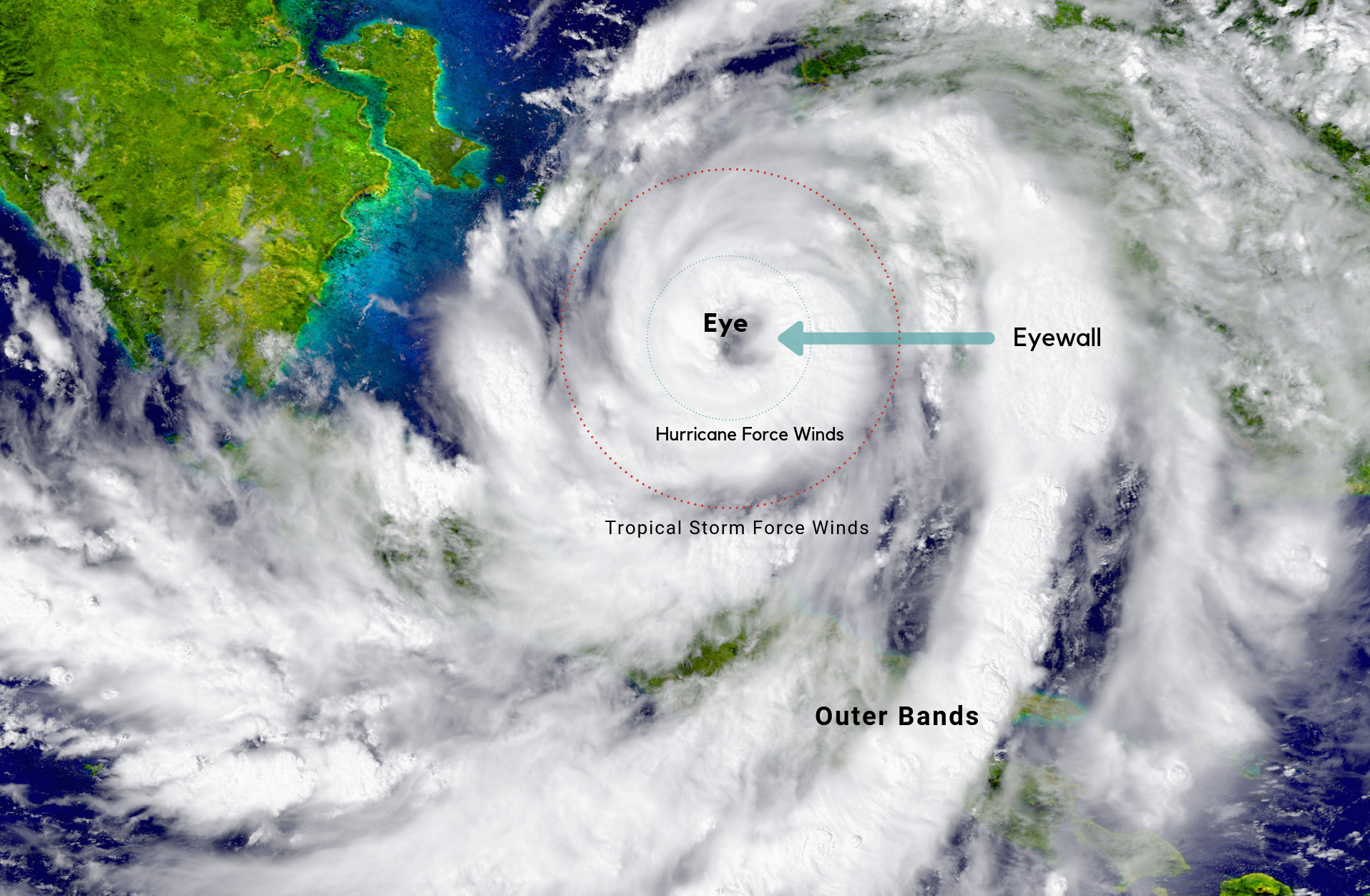
Sustained winds of 74-95. Hurricane winds blow in a counterclockwise spiral around the calm roughly circular center called the eye. Outflow feeder bands eyewall eye and the storm surge.
Hurricanes tropical storms and tropical depressions pose a variety of threats to people and property. Spiraling rainbands eye eye wall. The wall of intense thunderstorms surrounding the eye.
Hurricane Frances in 2004 was a Category 2 hurricane when it hit the west coast of Florida. Tropical cyclones with maximum sustained surface winds of less than 39 miles per hour mph are called tropical depressions. As it evaporates a cloud of warm air forms.
The strongest winds of the hurricane are in the eye wall. Strong Currents Hurricanes can cause flooding injury deaths tornados extremly severe thunder Storms. Rotation around a central core corresponds with the eye wall and spiral rain bands said William Straka III a researcher for the Cooperative Institute for Meteorological Satellite Studies at the University of Wisconsin-Madison.
Write 3 facts about each of those parts of the hurricane. Rainbands - Hurricanes have large. The storms are all the same but are called different names in different regions on Earth.
Storm surge and inland flooding have historically been the number one offsite link and two causes of loss of life during hurricanes. Sustained winds of 96-110. In the eye which is roughly 20 to 30 miles wide it is relatively calm and there is little or no rain.
The Eye and Everything Else. Different meteorological agencies across various parts of the world have their own climate models and methods of measuring storm i ntensity. Two main parts of a TyphoonHurricane based on function would be.
Sustained winds of of 156 and more. The eye is surrounded by a wall of deep clouds and deadly winds. A hurricane consists of five main parts.
The CB is formed as the heat from the warm water and water vapour from the. Cross section of a typical hurricane. Tropical Cyclone Classification What is the difference in a cyclone hurricane and typhoon.
Surrounding the eye is the eyewall a wall of thunderclouds. Sustained winds of 111-130. The stages of a hurricane begin with the formation of a disturbance.
Hurricane safety. Eye wall - Around the outside of the eye is a wall made up of very heavy clouds. Outflow is the high-level clouds moving outward from the hurricane.
Parts of a Hurricane Eye - At the center of the hurricane is the eye. Other definitions for Hurricanes. The storms lowest pressure reading are found here.
A tropical cyclone is a rotating low-pressure weather system that has organized thunderstorms but no fronts a boundary separating two air masses of different densities. Whatever they are called tropical cyclones all form the same wayThis website presented by NASAs Global Precipitation Measurement GPM mission provides students and educators with resources to learn about. Sustained winds of 131-155.
The eye is an area of very low air pressure. Hurricanes are the most awesome violent storms on Earth. The main parts of a tropical cyclone are the rainbands the eye and the eyewall.
Devastating damage will occur In a Category 3 hurricane winds range from 111 to. There are generally no. The massive bulk of the storm is made up of thunderstorm cells Cumulonimbus abbreviated CB.
The time to prepare for a hurricane is. If the hurricane struck your body directly that would be a.
Hurricane Facts How They Form And How To Prepare World Vision

Teach Your Students The Difference Between Climate And Weather The Online Text Includes A Labeled Diagram Of Hurricane Planet Unit The Unit Science Classroom
Anatomy Of A Hurricane


Comments
Post a Comment